
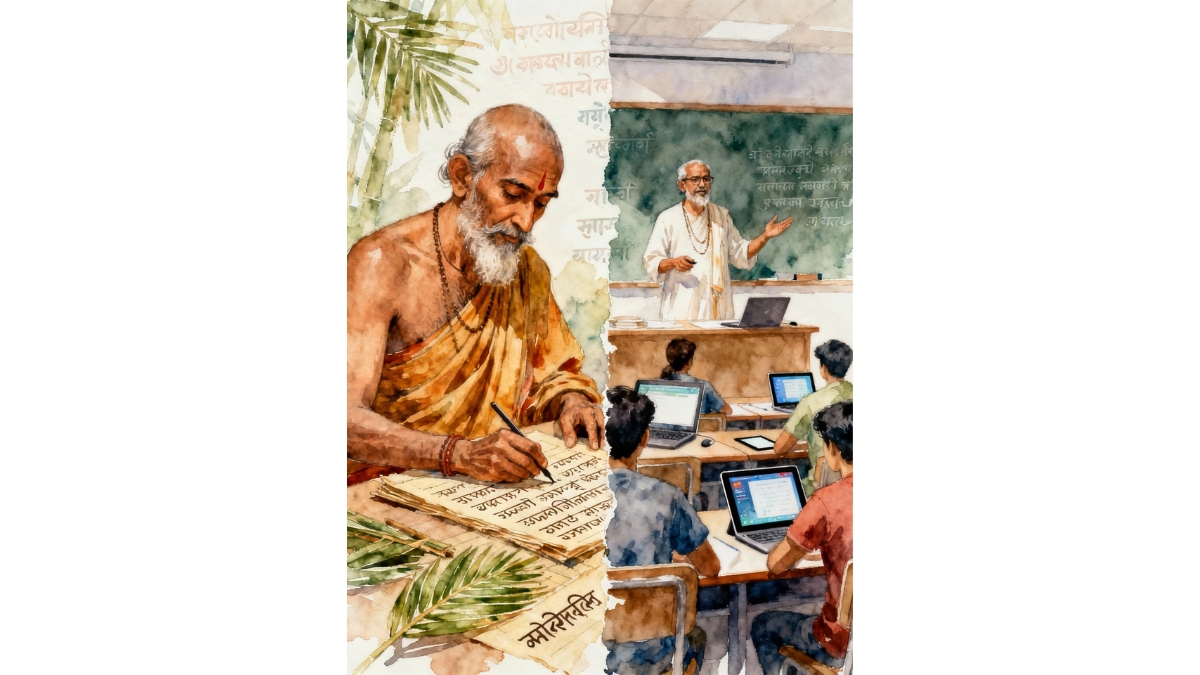
Bengaluru (Karnataka) [India], December 4: Learning Samskrita has always been a meaningful pursuit, yet many learners feel intimidated when they encounter rigid methods, dense rules, or traditional explanations that rely heavily on memorization. Today’s learners, especially working professionals and students, need clarity and structure. They prefer an approach that is systematic, easy to follow, and rooted in understanding rather than rote learning. Vidyasvam bridges this need by bringing together the depth of traditional Samskrita grammar and a learning environment designed for modern minds.
At Vidyasvam, the focus is not only on preserving the classical richness of the language but also on making it accessible and enjoyable. The program invites learners to understand why the language works the way it does, how grammar holds everything together, and how classical texts can be approached with confidence. This blend of tradition and modernity forms the core of Vidyasvam’s teaching philosophy.
Understanding the Core: Traditional Grammar Principles
Paninian grammar is central to Vidyasvam’s teaching. It is recognized as one of the most structured linguistic systems and offers a clear framework for understanding Samskrita. Instead of learning scattered rules, students are introduced to the foundational concepts that shape the entire language. They learn how words get their structure from their canonical roots, how the forms of words that express entities and actions transform, and how meaning is conveyed through grammatical relationships. The course begins by strengthening the basics—varṇa, pratyaya, prakṛti, sandhi, kāraka theory, and word formation. These concepts help learners see the underlying structure behind every sentence. By explaining the logic behind each rule, the program removes the confusion that many learners experience when trying to decode Samskrita through memorization alone. This foundation becomes essential when students later begin reading verses and texts.
A Modern Classroom for an Ancient Language
Even though the content is deeply traditional, the learning experience is built with modern tools. Vidyasvam uses concise presentations, clear diagrams, mind maps, and structured worksheets and custom-built software tools to explain the grammar. These visuals help learners grasp ideas that would otherwise take much longer to understand through text alone. For online learners, recordings of each session are available. This helps them revise the material at their own pace, revisit complex concepts, and reinforce their understanding. Regular quizzes are used to strengthen retention and ensure that learners are applying the rules rather than simply listening to them.
Discussion circles and mentoring groups also play an important role. Students share questions, work through examples, and learn from each other’s interpretations. This collaborative environment creates a practical and supportive learning space that keeps learners engaged through the program.
Application Over Memorization
One of the strongest aspects of Vidyasvam’s approach is the emphasis on applying grammar to real texts. Instead of practicing rules in isolation, students work with verses, especially from epics like Valmiki’s Ramayana and the Vyasa’s Mahabharata initially. Persistent learners may choose to progress to other classics offering aesthetic complexity — such as classics by Kalidasa, Bharavi and Harsha. This gives them hands-on experience in breaking down compound words, identifying kārakas, dissolving sandhis, and performing anvaya to understand the meaning of a shloka. This approach works especially well for learners from analytical, technical, or scientific backgrounds. They appreciate the logical flow and systematic breakdown that Paninian grammar offers. By applying grammar repeatedly in context, learners retain concepts naturally. This helps them develop the ability to work with classical texts independently, which is one of the primary goals of the course.
Designed for Modern Professionals and Students
Many learners at Vidyasvam are from fields like engineering, sciences, medicine, IT, management, and academia. They often want a structured path to understand Samskrita texts without relying fully on translations. The course format respects their time constraints while still maintaining depth. The prerequisites are simple: the ability to read Devanagari, comfort with analytical thinking, working knowledge of English, and basic computer literacy. The program moves at a pace that allows learners to absorb concepts steadily, even if they are balancing work and personal responsibilities.
The promise of independent reading is a major attraction. Learners understand from the beginning that this is not a casual course but one that gives them long-term skills. They progress from understanding basic forms to interpreting verses with confidence, supported by step-by-step guidance.
The Role of Expert Guidance
A central part of Vidyasvam’s teaching method is the clarity and experience of its facilitator, Dr. Sridhar Subbanna. His background in computer science, combined with deep study in Samskrita and Shastras, allows him to explain classical concepts with precision and simplicity. Students often mention how even complex sutras become understandable under his guidance.
His explanations use logic and structure, reflecting the natural design of the language. Learners appreciate the patience, clarity, and consistent support he provides throughout the course. This balance of expertise and approachability contributes greatly to the effectiveness of the program.
Structured Progression That Builds Confidence
The course is planned in a way that helps learners progress from the basics to text application without feeling overwhelmed. Each topic builds on the previous one, and practice exercises reinforce what has been taught. The workshop structure ensures that learners stay engaged while having enough time to internalize each concept.
As learners move through the modules, they begin to see how the pieces fit together. Shloka analysis becomes more intuitive, grammar rules start making sense, and the fear of Samskrita slowly fades. This methodical progression gives learners confidence to take up further studies or explore classical texts on their own.
Why This Blended Approach Works
Vidyasvam succeeds because it respects both tradition and the needs of today’s learners. The Paninian framework provides accuracy, depth, and intellectual strength, while modern teaching tools provide accessibility and clarity. Together, they create a balanced model that suits beginners, intermediate learners, and even those returning to Samskrita after many years. This approach helps learners move beyond rote learning and encourages genuine understanding. It becomes easier for them to appreciate the beauty of the language and the sophistication of its structure.
Conclusion
Vidyasvam’s approach to Samskrita shows how classical knowledge can be taught in a way that feels relevant and achievable today. By blending the rigor of traditional grammar with contemporary methods of instruction, the program offers a path that is both logical and inspiring. Learners who come with curiosity leave with clarity, confidence, and a strong foundation that supports further exploration of Samskrita and Indic knowledge texts.
If you have any objection to this press release content, kindly contact [email protected] to notify us. We will respond and rectify the situation in the next 24 hours.